
 IN
IN
 CA
CA
SIP vs VoIP: Difference, Benefits and Complete Guide for Businesses
SIP vs VoIP: What’s the Real Difference?
In today’s fast-paced digital landscape, businesses are rapidly shifting from traditional phone systems to internet-based communication. One of the most common comparisons is SIP vs VoIP , but many people still confuse the two.
Although SIP and VoIP are closely related, they are not the same. Understanding the difference between SIP vs VoIP helps businesses choose a communication system that is scalable, cost-effective, and future-ready.
Understanding VoIP in Modern Business Communication
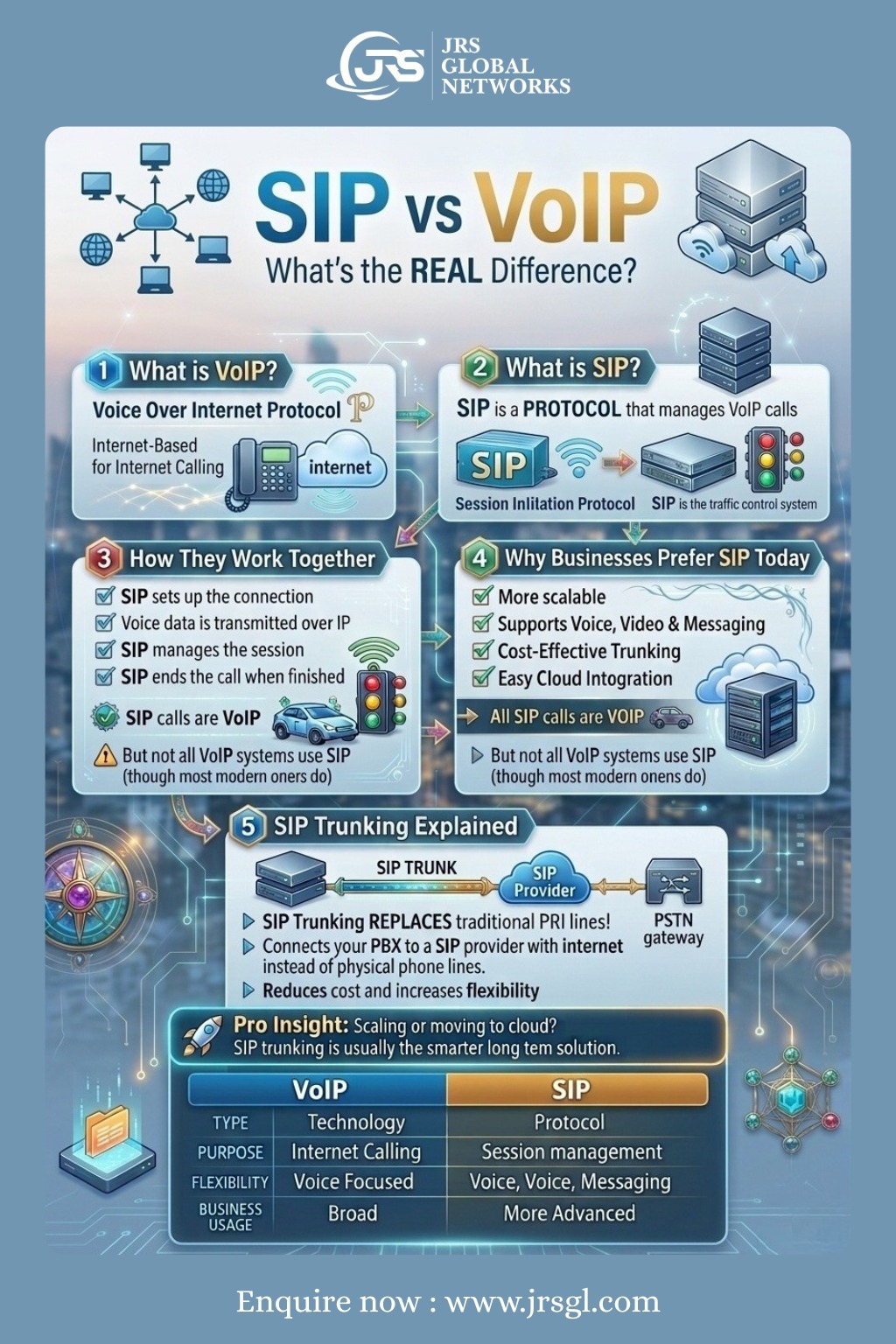
VoIP (Voice over Internet Protocol) is a technology that allows users to make voice calls using an internet connection instead of traditional telephone lines. It converts voice signals into digital data and transmits them over the internet.
Businesses often use reliable communication hardware from companies like Grandstream Networks to implement VoIP and SIP-based systems efficiently.

What is SIP and How Does It Work?
SIP (Session Initiation Protocol) is a signaling protocol that manages how communication sessions are started, maintained, and ended. While VoIP handles voice transmission, SIP controls the entire communication process.
SIP supports voice calls, video conferencing, and messaging, making it a complete communication solution. It also integrates easily with cloud platforms and CRM systems, helping businesses improve efficiency and collaboration.
Key Differences Between SIP vs VoIPThe main difference between SIP and VoIP lies in their functionality. VoIP is the technology that enables voice communication over the internet, while SIP is the protocol that manages those communications.
VoIP is generally used for basic voice calls, whereas SIP provides advanced capabilities such as multi-channel communication and scalability. This makes SIP more suitable for businesses with growing communication needs.
Why Businesses Are Choosing SIP Over Traditional Systems
As organizations expand, their communication requirements become more complex. SIP offers a scalable and cost-efficient solution that adapts to business growth. It allows companies to add or remove users without investing in additional hardware. It also unifies communication channels into a single platform, improving team collaboration and operational efficiency.
With the rise of remote and hybrid work, SIP enables employees to stay connected from anywhere, ensuring smooth and uninterrupted communication.
The Role of SIP Trunking in Business CommunicationSIP Trunking is an advanced application of SIP that replaces traditional phone lines with virtual connections over the internet. It connects business phone systems directly to the internet, eliminating the need for physical infrastructure.
This improves call quality, enhances reliability, and provides better scalability. SIP trunking also ensures business continuity with flexible routing and disaster recovery options.
Choosing the Right Solution: SIP vs VoIPWhen comparing SIP vs VoIP,the right choice depends on your business needs. VoIP is ideal for companies that need a simple and affordable calling solution. However, SIP is better suited for businesses that require advanced communication features and scalability.
Choosing SIP ensures long-term flexibility and supports business growth.
About JRS Global Networks
JRS Global Networks provides reliable and scalable telecom solutions tailored to modern business needs. From VoIP services to SIP trunking, the company helps organizations build efficient and future-ready communication systems.
Enquiry Now !