
 IN
IN
 CA
CA
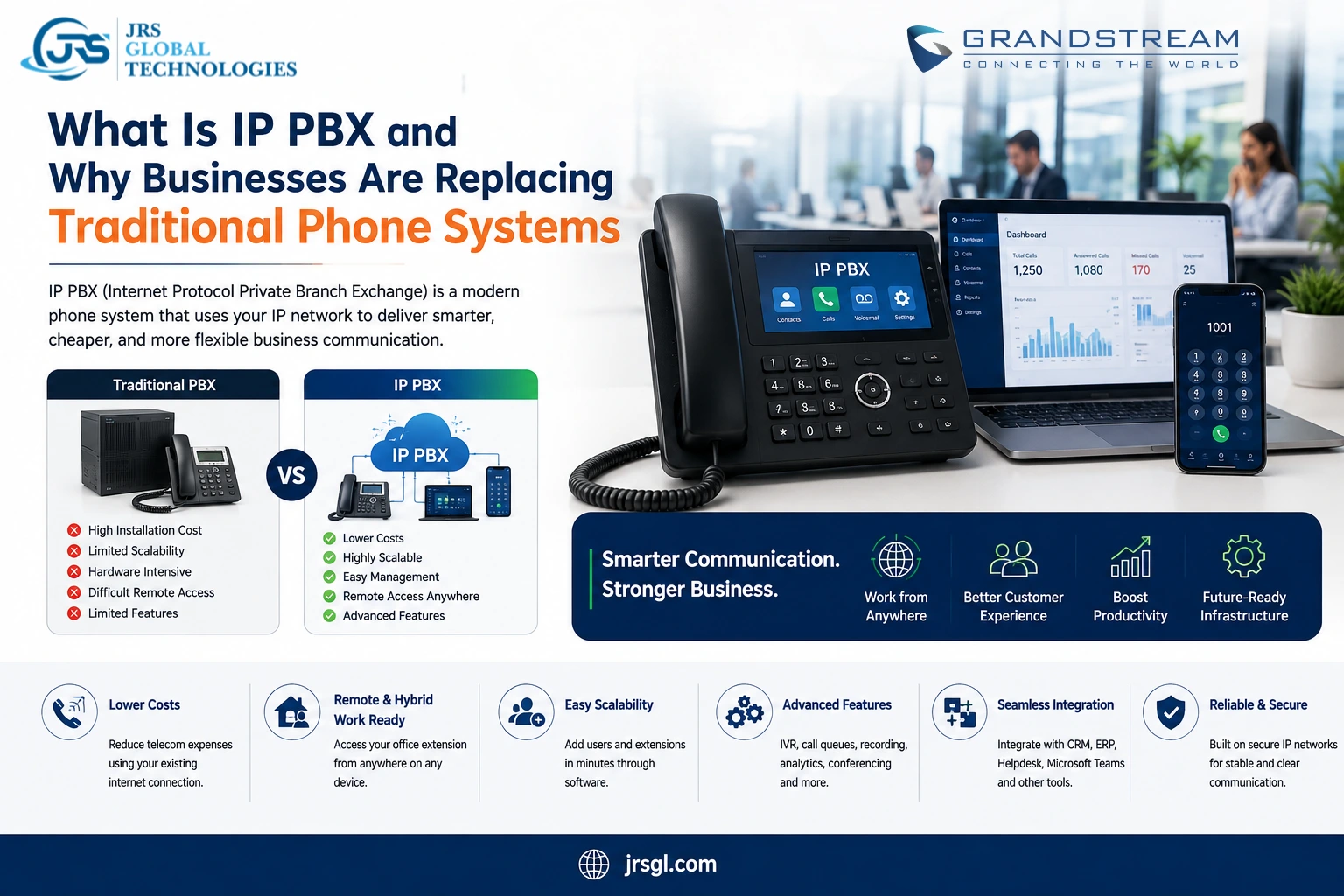
What Is IP PBX and Why Businesses Are Replacing Traditional Phone Systems
In today’s fast-moving digital world, business communication has evolved far beyond traditional landline telephones. Companies now need flexible, scalable, and cost-effective communication systems that support remote teams, multiple office locations, and modern collaboration tools. This is where IP PBX technology is transforming the way organizations communicate.
As communication needs continue to grow, businesses are increasingly turning to solutions offered by JRS Global Technologies Pvt Ltd to modernize their voice infrastructure and improve operational efficiency.
What Is IP PBX?
IP PBX (Internet Protocol Private Branch Exchange) is a business phone system that uses an IP network to transmit voice calls instead of relying solely on traditional analog telephone lines. It combines the functionality of a private branch exchange with VoIP (Voice over Internet Protocol) technology, allowing businesses to make and receive calls through the internet or a private data network.
An IP PBX system can connect:
- IP desk phones
- Mobile devices
- Desktop softphones
- Remote employees
- Branch offices
- Video conferencing applications
Unlike traditional PBX systems that require dedicated telephone wiring and expensive hardware, IP PBX uses the existing network infrastructure, making it more flexible and easier to manage.
How Does IP PBX Work?
IP PBX converts voice signals into digital data packets and sends them across an IP network. The system typically includes:
1. IP Phones or Softphones
Employees use hardware IP phones or software applications on computers and smartphones to make and receive calls.
2. IP PBX Server
The server manages:
- Call routing
- User extensions
- Voicemail
- Auto-attendant menus
- Call forwarding
- Conference calling
- Call recording
3. SIP Trunks
A SIP trunk connects the IP PBX to external telephone networks, enabling communication with mobile numbers and traditional landline users.
Why Businesses Are Replacing Traditional Phone Systems
Lower Communication Costs
Traditional phone systems often involve high installation costs, monthly line rentals, maintenance contracts, and expensive long-distance calling charges.
IP PBX significantly reduces these expenses by using the existing internet connection for voice communication. Businesses can lower operational costs while gaining access to advanced calling features.
Remote and Hybrid Work Support
Modern businesses no longer operate from a single office. Employees frequently work from home, travel, or collaborate across different locations.
IP PBX allows users to access their office extension from:
- Smartphones
- Laptops
- Tablets
- Remote IP phones
This ensures seamless communication regardless of where employees are located.
Easy Scalability
Adding new users to a traditional PBX system often requires additional hardware, wiring, and technician support.
With IP PBX, administrators can create new extensions and add users through software, making it ideal for growing businesses, startups, and multi-location organizations.
Advanced Business Features
IP PBX systems provide enterprise-grade features that improve customer service and internal collaboration, including:
- Interactive Voice Response (IVR)
- Call queues
- Ring groups
- Voicemail to email
- Call analytics and reporting
- Audio and video conferencing
- CRM integration
These capabilities help businesses manage customer interactions more efficiently and reduce missed opportunities.
Integration With Modern Business Tools
One of the biggest advantages of IP PBX is its ability to integrate with CRM platforms, helpdesk software, ERP systems, Microsoft Teams, and other cloud-based applications.
This allows employees to:
- Click to call directly from customer records
- Automatically log call details
- Access customer information during conversations
- Improve response times and productivity
IP PBX vs. Traditional PBX
| Feature | Traditional PBX | IP PBX |
|---|---|---|
| Connection Type | Analog/PSTN | IP Network |
| Installation Cost | High | Lower |
| Scalability | Limited | Highly Scalable |
| Remote Access | Difficult | Excellent |
| Maintenance | Hardware Intensive | Easier Software Management |
| Advanced Features | Limited | Extensive |
Key Benefits of IP PBX for Businesses
Businesses that switch to IP PBX typically experience:
- Reduced telecom costs
- Improved call quality
- Better mobility and remote access
- Faster business communication
- Simplified system management
- Enhanced customer experience
- Future-ready communication infrastructure
Is IP PBX Right for Your Organization?.
IP PBX is an excellent choice for organizations that:
- Have 10 or more employees
- Operate multiple offices
- Support remote or hybrid teams
- Need professional call management
- Want to scale quickly without major infrastructure investments
- Require integration with modern business applications